

Our history
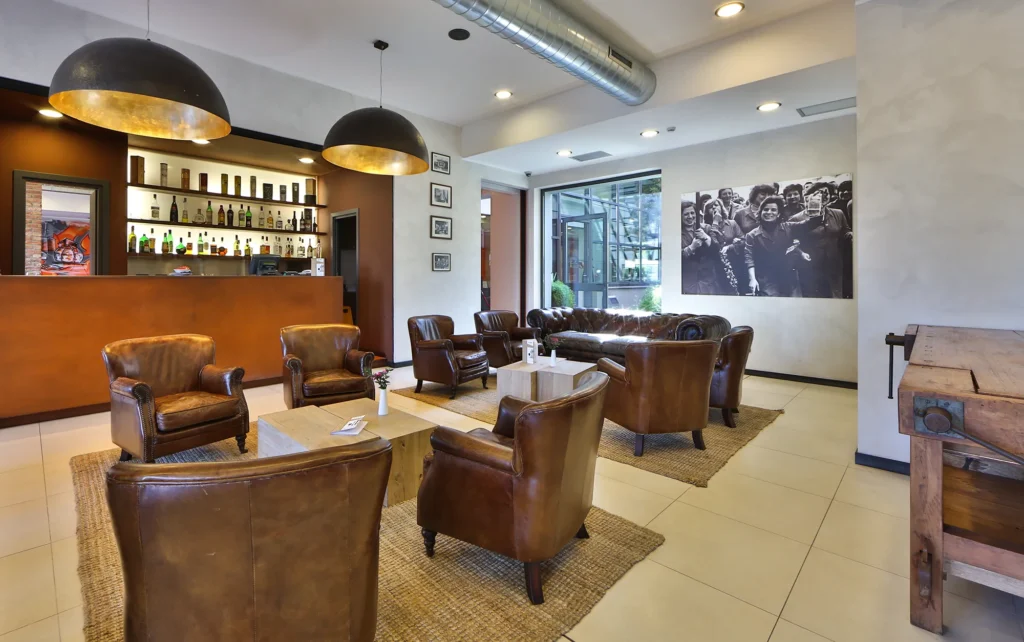
The Best Western Falck Village Hotel was born from the transformation of the former workers’ club of the largest Italian steelworks and is located in a very interesting urban context, between the houses of an early twentieth century Fordist village and the Falck village.
The original project was the work of engineer A. Franco and had the aim of “linking” employees to the life of the company, which provided – in exchange for a constant presence in the production area – with all social and housing needs of workers.
Between the ’20s and the ’30s the Falck village was completed: a cutting-edge complex, it included a nursery school (the second in Italy, back then, to use the Montessori method), an elementary school and a middle school.
An innovative corporate welfare system, aimed at emancipating the conditions of workers, which guaranteed summer camps and scholarships for the children of employees, internal mutual funds for medical and spa treatments, recreational facilities and sports facilities.
The Hôtel Particulier concept applied to Falck Village
The Circolo San Giorgio building today brought inside a piece of the Museum of Contemporary Photography: the Hotel becomes a permanent art exhibition hosting a selection of works belonging to the Museum’s collections, created by young Italian artists.
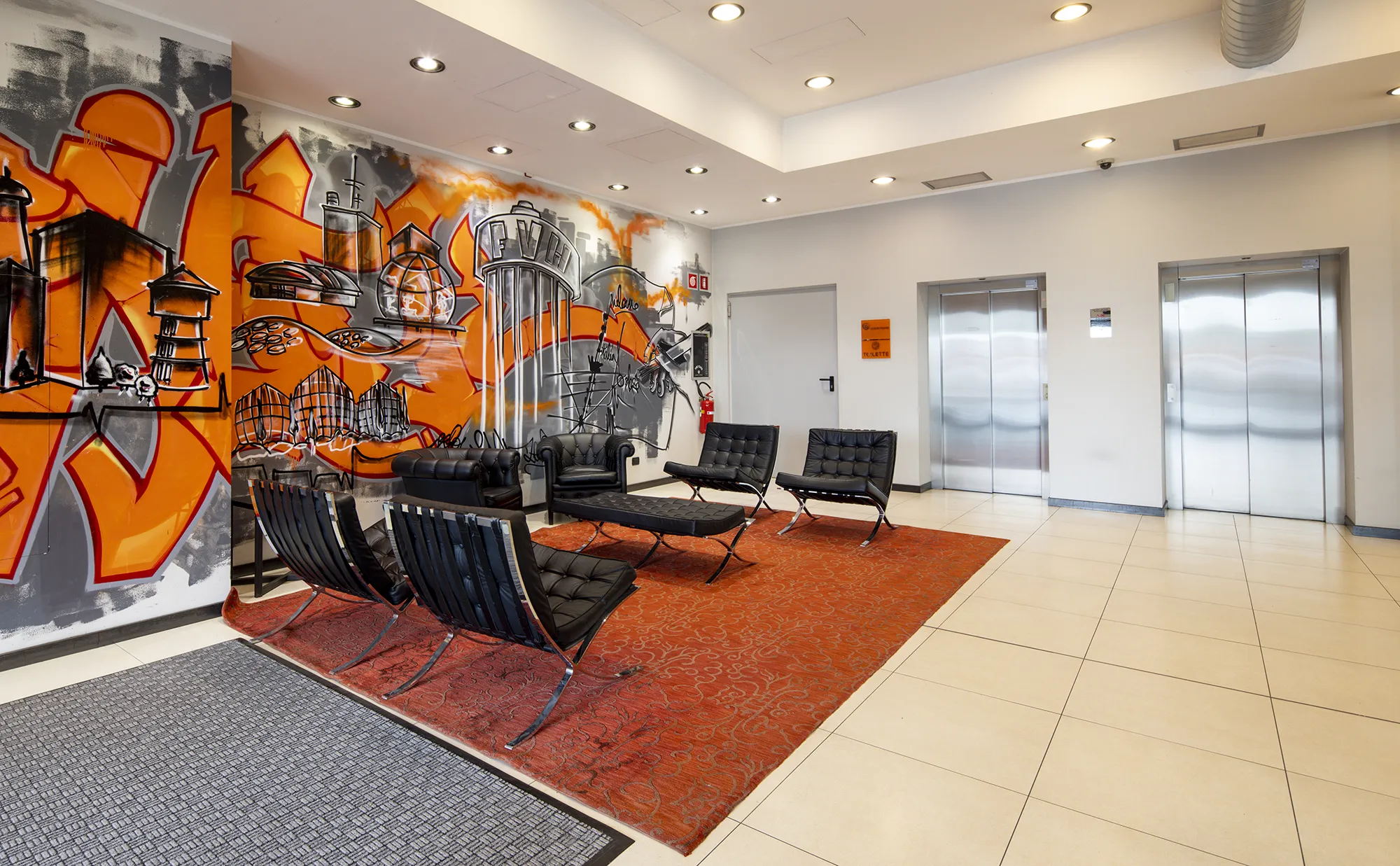
The journey begins in the hall, with the colors and liveliness of a mural created by a group of local writers, winners of a contest created by the hotel in 2011: the street artists enter the hotel to bring their vision of Sesto San Giovanni and the Falck steelworks between past, present and future.
Furthermore, in the hotel there is also an exciting collection of black and white photos of the inhabitants of the Falck village and a splendid photograph of the Stabilimento Unione, made by the illustrious Gabriele Basilico.
It continues in the rooms: each of them displays a photo-work that gives an extra touch to the environment, personalizing it and transmitting intense messages to the viewer.
The urban redevelopment of the former Falck steelworks
The Hotel is located within an area taht underwent an important transformation: the famous architect Renzo Piano began working on the urban redevelopment project of the former Falck abandoned areas in 2005.
In his ideal vision of the city of the future, Piano wanted to respect the history of Sesto as a city of factories and took up the concept of the factory as a forge, laboratory, titling his work on the Falck areas, “Milanosesto: factory of ideas“.
The largest urban park in Europe, business hubs, universities and research laboratories are the pivots around which this factory revolves: a livable city for everyone, a possible idea.
Today, the hotel is an excellent observation point from which to study and understand one of the most impressive redevelopment works in Europe.